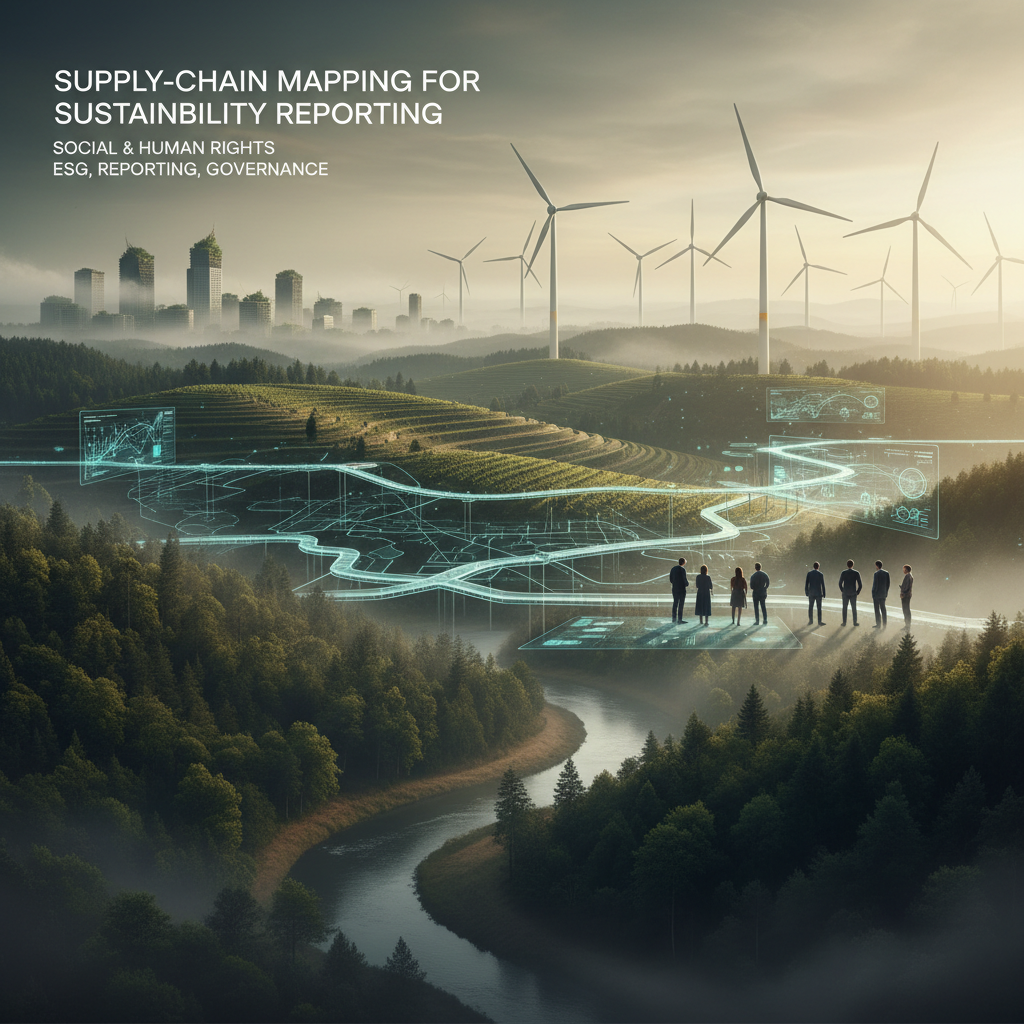
Supply-chain mapping has transitioned from an operational luxury to a regulatory necessity. As global reporting frameworks shift from voluntary to mandatory, the requirement for Tier 1 to Tier N visibility is now the baseline for credible sustainability disclosures. This article examines the methodologies for tracing value chains, the evidentiary requirements for human rights due diligence, and the integration of supply-chain data into corporate reporting cycles.
- Granular Transparency: Effective reporting requires moving beyond direct suppliers (Tier 1) to identify sub-tier actors where the highest risks of human rights violations and environmental degradation typically reside.
- Data Veracity: Organi
Deep Visibility: Supply-Chain Mapping for Sustainability Reporting
zations must transition from "best effort" surveys to verifiable evidence, including site audits, satellite imagery, and worker voice technology, to satisfy the assurance requirements of the IAASB and CSRD.
- Regulatory Convergence: The alignment of the EU Corporate Sustainability Reporting Directive (CSRD) with the Corporate Sustainability Due Diligence Directive (CSDDD) creates a legal mandate for comprehensive value chain mapping.
- Risk Mitigation: Mapping serves as the foundational layer for identifying "saliency"—the most severe potential impacts on people and the environment—rather than focusing solely on financial materiality.
- Strategic Resilience: Beyond compliance, deep visibility enables better procurement decisions, reduces exposure to geopolitical shocks, and protects brand equity against greenwashing allegations.
Why It Matters
The complexity of modern globalized production has historically shielded lead firms from the social and environmental impacts occurring deep within their supply bases. However, the era of "plausible deniability" has ended. For finance, audit, and risk professionals, supply-chain mapping is now a critical component of the internal control environment.
From a social and human rights perspective, the most egregious violations—such as forced labor, child labor, and unsafe working conditions—rarely occur at the final assembly stage. They are embedded in the extraction of raw materials or the processing of intermediate components. Without Tier N visibility, a company’s ESG disclosures are inherently incomplete and potentially misleading.
Investors are increasingly scrutinizing the "S" in ESG, recognizing that social risks are financial risks. A labor strike in a Tier 3 semiconductor facility or a human rights scandal in a cobalt mine can halt production lines and trigger massive divestment. Furthermore, the introduction of "double materiality" under the European Sustainability Reporting Standards (ESRS) requires companies to report not just on how sustainability issues affect the company, but how the company’s entire value chain affects the world.
"The shift from Tier 1 oversight to full-spectrum value chain visibility represents the single greatest challenge in modern corporate governance. It requires a fundamental re-engineering of how data flows from the mine site to the annual report."
The Standard / Framework in Detail

The landscape of supply-chain mapping is governed by a constellation of international standards that define what must be disclosed and how data should be gathered.
The UN Guiding Principles (UNGPs)
The UN Guiding Principles on Business and Human Rights provide the authoritative global standard for addressing the risk of adverse human rights impacts. They establish the "Protect, Respect, and Remedy" framework. For reporting purposes, the UNGPs require "Human Rights Due Diligence" (HRDD), which necessitates identifying and assessing any actual or potential adverse human rights impacts with which a business may be involved either through its own activities or as a result of its business relationships.
OECD Due Diligence Guidance
The OECD Due Diligence Guidance for Responsible Business Conduct provides practical, sector-specific blueprints for mapping. It emphasizes a six-step process:
- Embedding responsible business conduct into policies.
- Identifying and assessing adverse impacts.
- Ceasing, preventing, or mitigating adverse impacts.
- Tracking implementation and results.
- Communicating how impacts are addressed.
- Providing for or cooperating in remediation.
ESRS and the Value Chain
Under the EU’s CSRD, the European Sustainability Reporting Standards (ESRS) specifically address the value chain. ESRS 1 (General Requirements) dictates that the reporting undertaking must include information on material impacts, risks, and opportunities connected to its upstream and downstream value chain. If a company cannot collect this data after making "reasonable efforts," it must explain its attempts and its plan to obtain the data in the future.
GRI 204 and 414
The Global Reporting Initiative (GRI) remains the most widely used standard for impact reporting. GRI 204 (Procurement Practices) and GRI 414 (Supplier Social Assessment) require organizations to disclose the percentage of new suppliers screened using social criteria and the significant actual and potential negative social impacts identified in the supply chain.
Practical Applications
Mapping a supply chain to Tier N is a multi-year undertaking that requires a blend of technology, legal pressure, and boots-on-the-ground verification.
1. Segmentation and Prioritization
Attempting to map 10,000 suppliers simultaneously is a recipe for failure. Organizations must use a risk-based approach.
- Spend Analysis: High-spend suppliers are often the starting point, but spend does not always correlate with risk.
- Geographic Risk: Using indices like the ITUC Global Rights Index or Transparency International’s Corruption Perceptions Index to flag high-risk jurisdictions.
- Commodity Risk: Identifying "conflict minerals" (tin, tantalum, tungsten, gold), palm oil, cotton, or cobalt which have documented histories of labor abuses.
2. Data Collection Methods
The transition from Tier 1 to Tier N requires different data collection strategies for different levels of the chain:
- Tier 1: Direct engagement via Supplier Code of Conduct (SCoC) audits and Self-Assessment Questionnaires (SAQs).
- Tier 2 & 3: Contractual "flow-down" clauses that require Tier 1 suppliers to disclose their own suppliers.
- Tier N (Raw Materials): Blockchain-enabled traceability, mass-balance accounting, or physical chemical markers (e.g., DNA tracing in cotton).
3. Evidence Collection and Verification
Reporting is only as good as the underlying evidence. Auditors now look for:
- Chain of Custody (CoC) Documentation: Invoices, bills of lading, and certificates of origin.
- Third-Party Audits: SMETA (Sedex Members Ethical Trade Audit) or SA8000 certifications.
- Worker Voice Data: Anonymous mobile surveys of factory floor workers to bypass "staged" audits.
Comparison of Mapping Approaches
| Feature | Survey-Based Mapping | Traceability-Based Mapping | Ecosystem Mapping |
|---|---|---|---|
| Primary Tool | Questionnaires (SAQs) | Blockchain / RFID / DNA | Satellite / AI / Open Source |
| Depth | Usually Tier 1, some Tier 2 | Tier 1 to Source | Geographic / Regional |
| Cost | Low to Moderate | High | Moderate |
| Reliability | Low (Self-reported) | High (Verifiable) | High (Independent) |
| Best For | Initial screening | High-risk commodities | Environmental/Land use monitoring |
Industry Examples
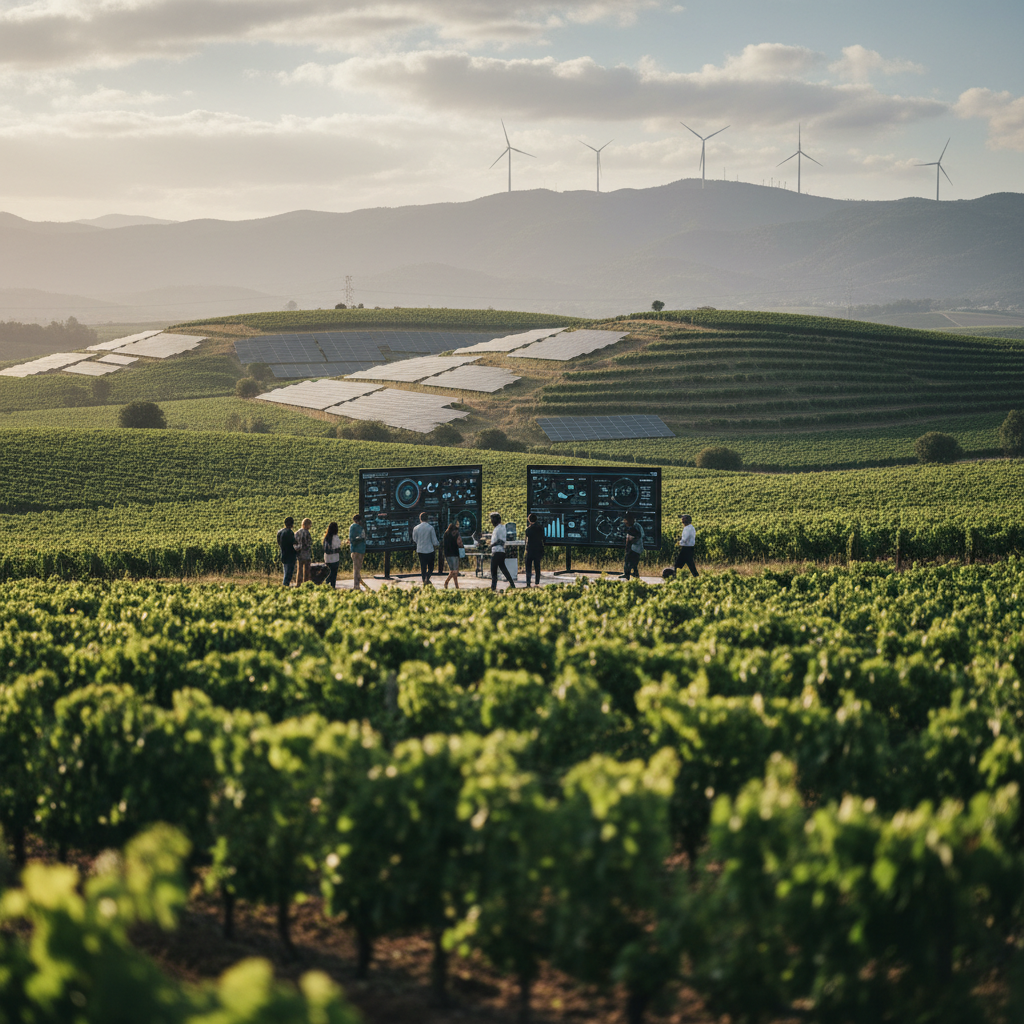
1. Electronics Sector: The Cobalt Challenge
A major global electronics manufacturer faced intense scrutiny over child labor in artisanal cobalt mines in the Democratic Republic of Congo (DRC). Their Tier 1 suppliers were battery manufacturers in Korea and China. To map to the source, the company joined the Responsible Minerals Initiative (RMI). They moved beyond Tier 1 by requiring battery suppliers to provide a full list of smelters and refiners. By focusing on the "chokepoint" in the supply chain—the smelter—they were able to verify that 100% of their cobalt sources were participating in third-party audit programs. Lesson: Identify the "chokepoint" (e.g., smelters, mills, or gins) where the supply chain narrows, as this is the most efficient place to verify origin.
2. Apparel Sector: Cotton Traceability
A European fashion retailer needed to comply with the Uyghur Forced Labor Prevention Act (UFLPA) and the upcoming EU Forced Labor Regulation. They implemented DNA-based tracing. By testing the physical cotton fibers in finished garments, they could match the isotopic signature of the cotton to specific regions. This allowed them to bypass fraudulent paperwork provided by intermediaries. Lesson: Physical evidence (science-based tracing) is superior to paper-based evidence in high-risk social contexts.
3. Food & Beverage: Palm Oil Transparency
A multinational consumer goods company utilized satellite imagery combined with mill-level data to map its palm oil supply chain. By overlaying their supplier locations with deforestation maps, they could identify which Tier 3 or Tier 4 mills were sourcing from protected areas. They published a "Universal Mill List" to provide public transparency and invite NGO scrutiny. Lesson: Transparency can be a tool for risk management; public disclosure of the supply chain encourages collective accountability.
Regulatory Implications
The regulatory environment is shifting from "disclose if you want" to "disclose or be penalized."
- CSRD / ESRS (EU): The Corporate Sustainability Reporting Directive requires detailed value chain reporting. Specifically, ESRS S2 (Workers in the Value Chain) mandates disclosures on how the company affects its upstream and downstream workers. EU CSRD Overview
- ISSB (IFRS S1 & S2): The International Sustainability Standards Board requires companies to disclose material information about their sustainability-related risks and opportunities across the value chain. IFRS Sustainability Standards
- GRI Standards: GRI 308 and 414 are the global benchmarks for supplier environmental and social assessment. GRI Standards Glossary
- C-SDDD (EU): The Corporate Sustainability Due Diligence Directive goes beyond reporting, requiring companies to identify, bring to an end, prevent, mitigate, and account for negative human rights and environmental impacts in their own operations and their value chains. EU CSDDD Portal
- German Supply Chain Act (LksG): One of the first national laws to mandate Tier N due diligence based on "substantiated knowledge" of violations. BAFA LksG Guidance
- SBTi: While focused on carbon (Scope 3), the Science Based Targets initiative requires deep value chain mapping to accurately report and reduce indirect emissions. SBTi Corporate Manual
The 2026 ESG Reporting & Assurance Playbook
A 42-page practical guide covering IFRS S1/S2, CSRD/ESRS and ISSA 5000 — written for finance, audit and sustainability teams.
Implementation Roadmap
Phase 1: Foundation (Quarter 1)
- Policy Alignment: Update the Supplier Code of Conduct to include mandatory Tier N disclosure requirements.
- Internal Stakeholder Mapping: Align Procurement, Legal, Sustainability, and Risk departments.
- Tool Selection: Evaluate ESG data management platforms capable of multi-tier mapping.
Phase 2: Risk Assessment (Quarter 2)
- Inherent Risk Mapping: Use industry and geographic data to identify which product lines or commodities carry the highest social risk.
- Tier 1 Onboarding: Distribute advanced SAQs to the top 80% of suppliers by spend and 100% of suppliers in high-risk categories.
- Gap Analysis: Identify where Tier 1 suppliers lack visibility into their own upstream providers.
Phase 3: Deep Dive (Quarter 3-4)
- Sub-Tier Engagement: Request Tier 1 suppliers to nominate their key Tier 2 providers.
- Verification: Conduct on-site social audits for high-risk Tier 1 and Tier 2 sites.
- Traceability Pilots: Implement physical tracing (e.g., blockchain or isotopic testing) for one high-risk commodity.
Phase 4: Reporting & Integration (Year 2)
- Data Consolidation: Integrate supply-chain social data into the central ERP or ESG reporting system.
- Assurance Readiness: Prepare "audit trails" for external assurance providers (IAASB / ISAE 3000).
- Continuous Monitoring: Establish an automated grievance mechanism that reaches workers at sub-tier levels.
Common Pitfalls
- The "Survey Fatigue" Trap: Sending 200-question surveys to small suppliers often results in low-quality or fabricated data. Keep requests focused and proportional to the supplier's size and risk.
- Over-Reliance on Tier 1: Assuming that because a Tier 1 supplier has a "Gold" rating from a sustainability platform, their entire sub-chain is clean. This is rarely the case.
- Data Silos: Keeping supply-chain mapping data in the Procurement department while the Sustainability team writes the report. This leads to inconsistencies and missed risks.
- Ignoring the "Downstream": Focusing exclusively on suppliers (upstream) while ignoring the social impacts of product use and disposal (downstream), which is required by ESRS.
- Lack of Remediation: Mapping a problem (e.g., child labor at Tier 3) but having no protocol for how to fix it without causing further harm to the vulnerable parties.
Case Snapshot
Organization: Global Automotive OEM Challenge: Mapping the "Battery Passport" requirements for the EU Battery Regulation. Action: The company mapped 14 layers of the supply chain for lithium-ion batteries, from the car dealership back to the specific mine site in Australia and Chile. They utilized a decentralized ledger (blockchain) where each actor in the chain uploaded their environmental and social certificates. Result: The company achieved 95% visibility of its lithium supply. When a social unrest event occurred near a major mine, the company was able to assess the impact on its production schedule and its human rights profile within 24 hours. Key Metric: Reduction in "unknown" origin materials from 60% to 5% over three years.
Key Takeaways
- Risk Over Spend: Prioritize mapping based on the severity of potential human rights impacts (saliency) rather than just the dollar value of the supplier contract.
- Contractual Leverage: Use legal contracts to mandate transparency. If a supplier refuses to disclose their sub-tiers, it should be treated as a high-risk red flag.
- Technology is an Enabler, Not a Solution: Software can track data, but it cannot replace the need for physical audits and worker engagement in high-risk zones.
- Assurance is the Goal: Build your mapping process with the end-auditor in mind. Ensure every data point has a verifiable source document.
- Collaborate with Peers: Supply chains are shared. Participating in industry groups (like the RBA or Sedex) allows for shared audits and standardized data, reducing the burden on suppliers.
- Double Materiality is the Standard: Reporting must cover how the supply chain affects the company (financial) and how the company affects the supply chain (impact).
Frequently Asked Questions
Q1: How far down the supply chain are we legally required to map? Under the CSRD/ESRS, you must map as far as is necessary to identify "material" impacts. For high-risk sectors like mining or textiles, this effectively means mapping to the point of origin (the mine or the farm).
Q2: What if a supplier refuses to provide information about their own suppliers citing "commercial confidentiality"? This is a common hurdle. Solutions include using a third-party "clean room" or an ESG platform where the supplier can upload data that is verified by the platform but not fully visible to the buyer, or including non-disclosure agreements (NDAs) that specifically allow for sustainability reporting.
Q3: Is a Tier 1 social audit enough for compliance? No. Most modern regulations (CSDDD, German LksG) and reporting standards (GRI, ESRS) recognize that the most significant risks are beyond Tier 1. A Tier 1 audit is a starting point, not a destination.
Q4: How does supply-chain mapping relate to Scope 3 emissions? They are two sides of the same coin. Mapping for social risks (who is working?) often provides the exact same data needed for Scope 3 (what is the energy use/transport distance?). Integrating these efforts saves significant resources.
Q5: What is "Worker Voice" technology? It refers to digital tools (apps, SMS, or voice surveys) that allow workers to report on their conditions directly and anonymously. This provides a "ground-truth" that often contradicts the official paperwork seen during a scheduled audit.
Q6: Can we use AI for supply-chain mapping? Yes. AI is increasingly used to scrape news reports, social media, and shipping records to "predict" connections between companies and identify potential hidden risks or undisclosed sub-tier relationships.
Further Reading
Frequently asked questions
Become a certified specialist on this topic.
Enroll in Certified Sustainability Reporting Professional (CSRP) or request a corporate training programme for your team.
References & sources
Join the conversation
Sign in to comment and discuss this analysis with other ESG professionals.
Sign in to comment